


Recycling the Problem.
Why circularity without material integrity and intelligent governance risks circulating the very risks it claims to solve.
BY MIKHAEL AKASHA
Why Circularity Alone Cannot Secure Long-Term Value Creation.
Circularity has become the flagship language of sustainability. Boardrooms speak of loops, governments design circular roadmaps, and corporate strategies increasingly promise to “close the loop.”
Yet beneath the narrative sits a structural contradiction.
“Circularity optimises flows. Long-term value creation depends on system integrity.” — Mikhael Akasha
The global economy is becoming more circular on paper, while the material footprint of humanity continues to expand.
According to the United Nations Environment Programme, global material extraction has tripled since 1970, rising from 27 billion tonnes to over 100 billion annually, with projections of 160–190 billion by 2060.
The Circle Economy Foundation estimates the global economy is only about 7% circular — down from roughly 9% just a few years ago as material consumption accelerates.
In other words, circular initiatives are growing, but they are being outpaced by linear expansion. The dominant circularity narrative misses a deeper reality: circularity optimises flows, while long-term value creation depends on system integrity.
A system can circulate materials efficiently and still generate declining ecological, social and economic value.
The material health gap.
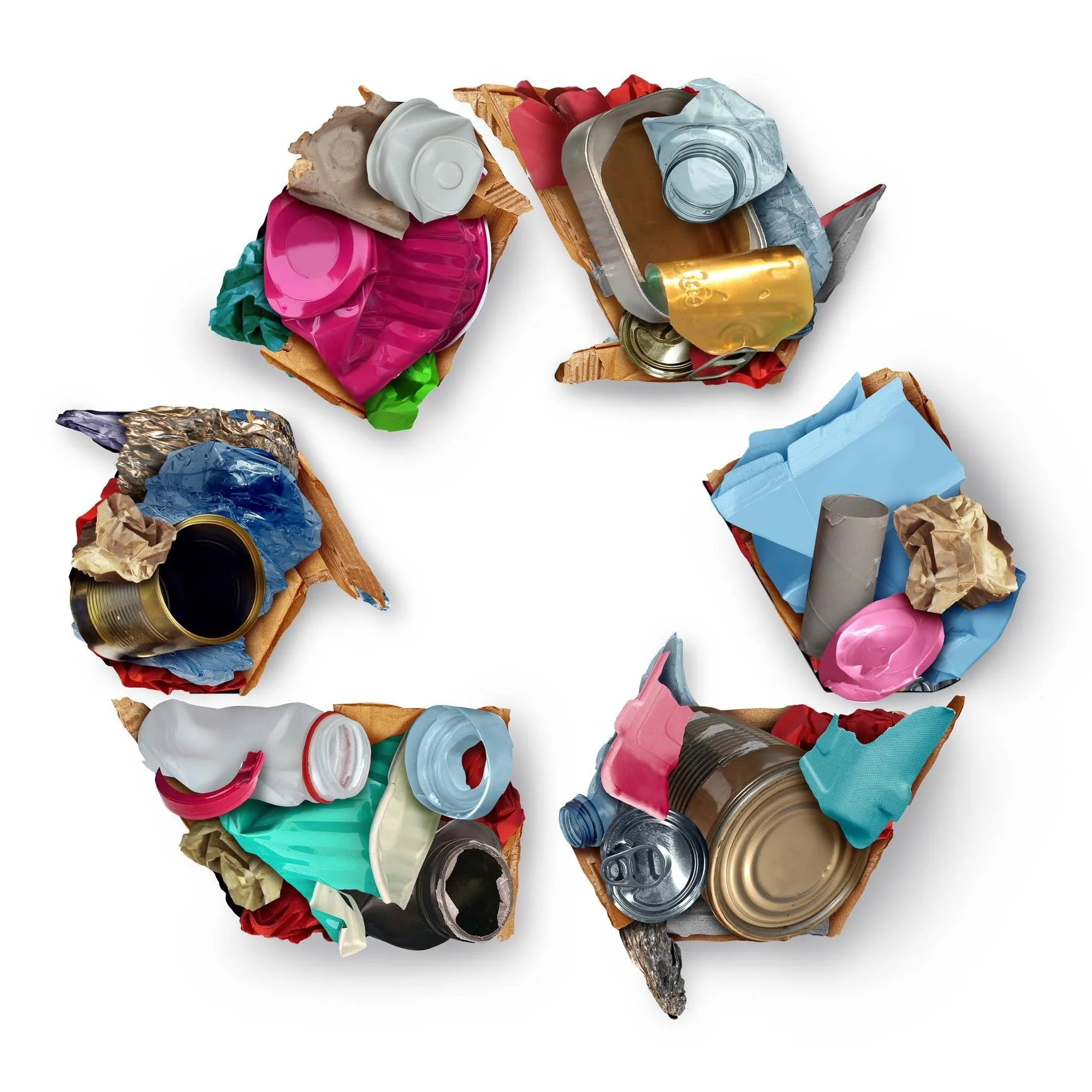
The second blind spot sits within the materials themselves.
Circularity is often framed as a technical challenge: recycling infrastructure, product take-back systems, and reverse logistics.
But the real constraint is more fundamental: material chemistry.
The European Chemicals Agency tracks more than 200,000 industrial chemicals, while the Stockholm Convention on Persistent Organic Pollutants identifies numerous substances capable of persisting in ecosystems and accumulating through food chains.
When such materials enter circular systems, the loop does not purify them. It distributes them.
This phenomenon sometimes called “toxic circularity” has already been documented in multiple industries:
• Flame retardants circulating through recycled plastics
• Heavy metals reappearing in electronic recycling streams
• Chemical additives re-entering consumer goods through recycled materials
A circular system without material health does not eliminate pollution. It recirculates pollution with greater efficiency.
This exposes a conceptual flaw in the circular economy narrative: the assumption that all materials are suitable for circular flows. They are not.
Some materials degrade with each cycle. Others accumulate toxins. Others require energy inputs that negate environmental benefits.
Circularity therefore cannot be separated from material intelligence.
Governance implications
This gap exposes a deeper governance challenge.
Most sustainability frameworks reward measurable indicators: recycled content, waste diversion rates, carbon intensity and circular product claims.
Rarely do they evaluate the qualitative integrity of materials and systems.
The OECD estimates that environmental externalities from material extraction and pollution already cost the global economy trillions of dollars annually, yet most corporate reporting frameworks treat them as secondary indicators.
As a result, companies can improve circular metrics while expanding total material throughput.
In practice, circularity risks becoming a performance metric rather than a design philosophy.
The problem deepens when regulation becomes the dominant driver of sustainability action. Across many industries, organisations now operate under sophisticated compliance regimes: ESG reporting standards, carbon disclosure rules, taxonomy classifications and circularity mandates.
These frameworks have improved transparency. But they have also produced an unintended side effect: innovation by compliance.
Organisations optimise for regulatory alignment rather than systemic redesign. In some cases, regulation even produces artificial constraints. Large industrial operators have reported situations where energy production capacity exists, but regulatory rules governing grid access or reporting requirements create perceived shortages. The issue is not always physical scarcity, it is governance architecture.
When governance focuses on metrics instead of system quality, organisations become excellent at reporting progress without fundamentally improving the system itself.

The trust signal organisations should not ignore
“Trust in sustainability does not emerge from reports or metrics. It emerges when people sense coherence between intention, design, and the materials shaping the system.”
Another signal is quietly emerging inside organisations and markets alike.
Employees, partners and customers increasingly sense when sustainability initiatives lack depth. Even when the language is polished and dashboards look impressive, something fails to resonate.
In many cases, the discomfort is intuitive rather than analytical.
Part of this stems from the material health gap. When sustainability strategies focus on circular flows, reporting frameworks and compliance metrics while overlooking material integrity, the narrative begins to feel misaligned with reality.
Over the years, I have observed this pattern repeatedly in my own work: in organisational innovation projects, in strategy conversations with partners, and in Executive MBA programmes where leaders critically examine sustainability strategies from within their own industries.
Participants often express a similar intuition. Many sustainability initiatives are directionally positive, yet somehow incomplete. Beneath the surface sits a quiet but persistent question:
Are we truly solving the problem, or simply redesigning the system around the same materials and assumptions?
This subconscious recognition matters more than it might appear.
Trust in sustainability does not emerge from reports, frameworks, or targets alone. It emerges when people sense coherence between intention, design, and the underlying materials shaping the system itself.
When that coherence is missing, even the most sophisticated sustainability strategies can begin to feel like carefully managed narratives rather than genuine transformation.
And in an era where trust has become one of the most fragile forms of capital, that perception carries strategic consequences.
A practical step forward
One practical step organisations can take is to introduce material health as a baseline lens within selected innovation projects.
Not every product line or supply chain can be redesigned overnight. But organisations can deliberately create a stream of exploratory projects that examine what truly healthy material systems might look like within their value propositions and industry.
Such initiatives move beyond incremental circular improvements and instead ask more fundamental design questions:
What materials would we choose if we designed this product today from first principles?
Which inputs are compatible with long-term ecological and human health?
How might simpler material systems strengthen resilience across the value chain?
For some sectors, this transition is easier than for others. Industries built around complex chemistry or legacy materials may face deeper redesign challenges. Yet even in these cases, exploring material health through innovation pilots can offer an important risk management pathway. Revealing dependencies, regulatory exposure, and future supply constraints before they become structural liabilities.
Crucially, this signal must be carried clearly by executive leadership and placed firmly on the strategic agenda. When leaders explicitly recognise material integrity as a core design principle, not merely a sustainability aspiration, it establishes the direction and legitimacy for organisations to explore fundamentally better solutions. By embedding this priority into innovation programmes and decision-making processes, leadership creates the space for teams to question existing assumptions and design products and systems that are healthier, simpler, and more resilient by design.
Without this signal from the top, innovation efforts often remain confined to incremental improvements within existing assumptions.
“When leaders recognise material integrity as a design principle, not merely a sustainability aspiration, innovation begins to change direction.” — Mikhael Akasha
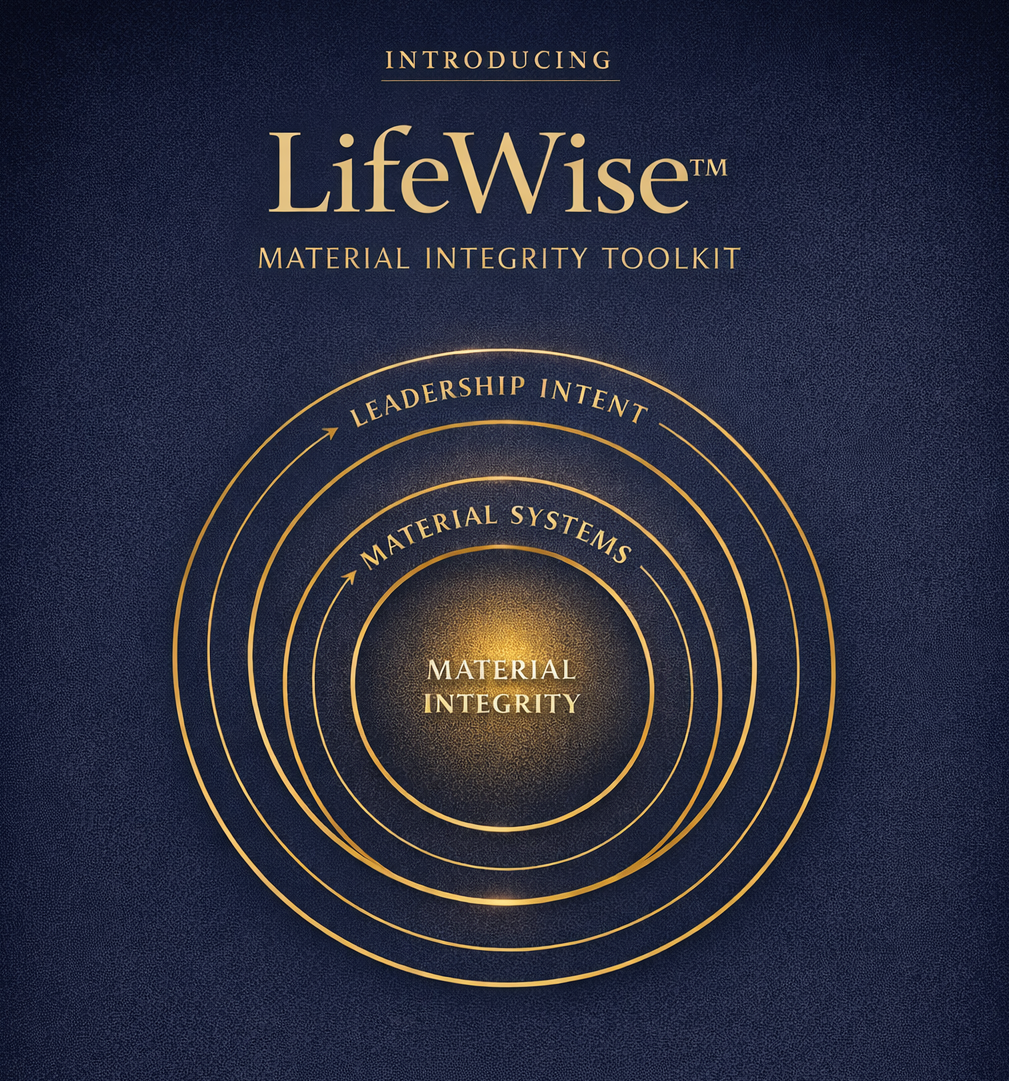
I have developed the LifeWise™ Material Integrity Toolkit, a collection of practical canvases and diagnostic tools that enable organisations to benchmark material integrity and identify pathways toward healthier material systems within their innovation programmes. For organisations ready to move in this direction, I welcome the conversation.

About the Author
Mikhaël Akasha is a transformational leader working at the intersection of systemic strategy, life-serving innovation, and human development. As founder of Cinmaya and as Innovation Lead and Lecturer at Maastricht University, he supports organisations in translating purpose into practical strategy, applied innovation, and learning journeys that endure over time.
Bridging decades of work with global organisations, academic leadership programmes, and ancient wisdom traditions, his work invites leaders to let clarity within shape conscious action and to design innovation that truly serves life.