

Innovation Begins Where Attention Turns InwarD.
An alchemical perspective on change, healing, and embodied action.
BY MIKHAEL AKASHA

I live with one foot in the world of systems and one foot in the unseen.
In lecture halls and boardrooms, as a university lecturer and innovation lead at the School of Business & Economics of Maastricht University, I work with models, methods, strategies, and futures. Innovation there is largely mental and external: understanding markets, redesigning organisations, navigating complexity, translating insight into action.
At CINMAYA, my work turns inward. It moves through the body, the nervous system, the emotional field, and the subtle layers of being. Here, change is not first a concept, but a state. Not an idea, but a remembrance.
At first glance, these worlds may seem far apart.
In truth, they are two expressions of the same movement.
Two Directions of Change and the Unspoken Third
Innovation discourse today is dominated by external problem-solving: new technologies, new business models, new organisational architectures. We teach it in universities. We consult on it in boardrooms. We write strategies to capture and exploit it. This outward gaze is vital, yet it has a blind spot: it assumes the knower is stable, coherent and unconstrained. In reality, the human being doing the innovating is the limiting variable.
There is another direction of change: inward transformation. This is not self-improvement or wellbeing as a buzzword. It is the non-negotiable work of encountering the parts of ourselves that drive behaviour unconsciously: patterns, shadows, emotional regulation, identity structures and implicit survival strategies. These inner dynamics are not incidental. They are the operating system beneath every decision, relationship and organisational intervention.
Most professional education teaches what to design and how to manage complexity externally. Very few programmes teach who is designing in the first place, and how that person is organised internally.
The result? Brilliant strategies deploy through fractured vessels. Insight hits resistance. Systems change leaks back into old patterns. The innovation we intend and the future we manifest diverge.
What we are missing is not another framework.
It is a vertical axis of integration between inner coherence and outer action.
Outward Change: Strategy Without Self-Mastery
Outward change operates primarily at the cognitive and systemic level. It is characterised by:
analytical reasoning and abstraction
strategic frameworks and models
organisational and technological design
behavioural interventions and governance mechanisms
This mode of innovation is highly effective for diagnosing problems and proposing structural responses. Yet it assumes that the individuals and teams enacting change are neutral instruments of rationality.
Research in organisational behaviour, leadership studies, and psychology consistently demonstrates the opposite. Decision-making is shaped by emotional regulation, identity, unexamined assumptions, power dynamics, and stress responses. When these inner variables remain unaddressed, they reappear indirectly, through resistance to change, ethical blind spots, burnout, or misalignment between stated values and enacted behaviour.
This is not a lack of intelligence.
It is a lack of coherence between cognition and presence.
Inward Change: Embodiment, Wholeness and Transmutation
Inward change addresses how individuals and groups experience, process and enact change.
At its core, the inward journey concerns wholeness: the coherence of cognitive, emotional, somatic and intuitive dimensions of human functioning. Fragmentation between thinking and feeling, intention and behaviour, values and action creates internal inconsistency that manifests at the organisational level.
Patterns I describe as “shadows” which can express in themes like control, avoidance, perfectionism, or over-identification with roles, can be understood as adaptive responses to conditioning (deviations). While functional at one stage, these patterns become limiting when they operate unconsciously.
From this perspective, inner-work is a process of transmutation. Emotional and energetic patterns are reorganised, restoring flexibility and coherence. This enhances an individual’s capacity to hold complexity, make grounded decisions, and act without excessive reactivity.
The Missing Third: Vertical Integration
The innovation field treats inward and outward change as separate domains. In practice, they are two sides of the same developmental vector.
Innovation becomes durable only when:
inner clarity shapes design logic
embodied presence informs strategic choice
leadership emerges from interior coherence, not compliance
behaviours align with values under pressure, not just in theory
When we integrate inward and outward change, we no longer treat complexity as an obstacle to manage but as a teacher to assimilate. Challenge becomes a catalyst for capacity expansion.
You cannot innovate systems more reliably or ethically than you have innovated yourself.
Innovation is not a product of smarter frameworks alone.
It is the expression of humans capable of holding ambiguity, responsibility and depth without fragmentation.
Now, innovation is not merely instrumental, but developmental.
“Systems can only evolve to the extent that the individuals designing and leading them have developed the capacity to embody that evolution.”
— Mikhael Akasha
What This Means for Practice
If you are serious about sustainable change:
Treat inner alignment as a design variable, not an optional extra.
Make reflection and embodiment part of strategic education, not afterthoughts.
Use transitions and tensions as developmental milestones, not problems to suppress.
Build feedback loops between inner states (stress, trust, regulation) and organisational outcomes.
In innovation, the real constraint is not resources or technology: It is the unexamined human operating the system.
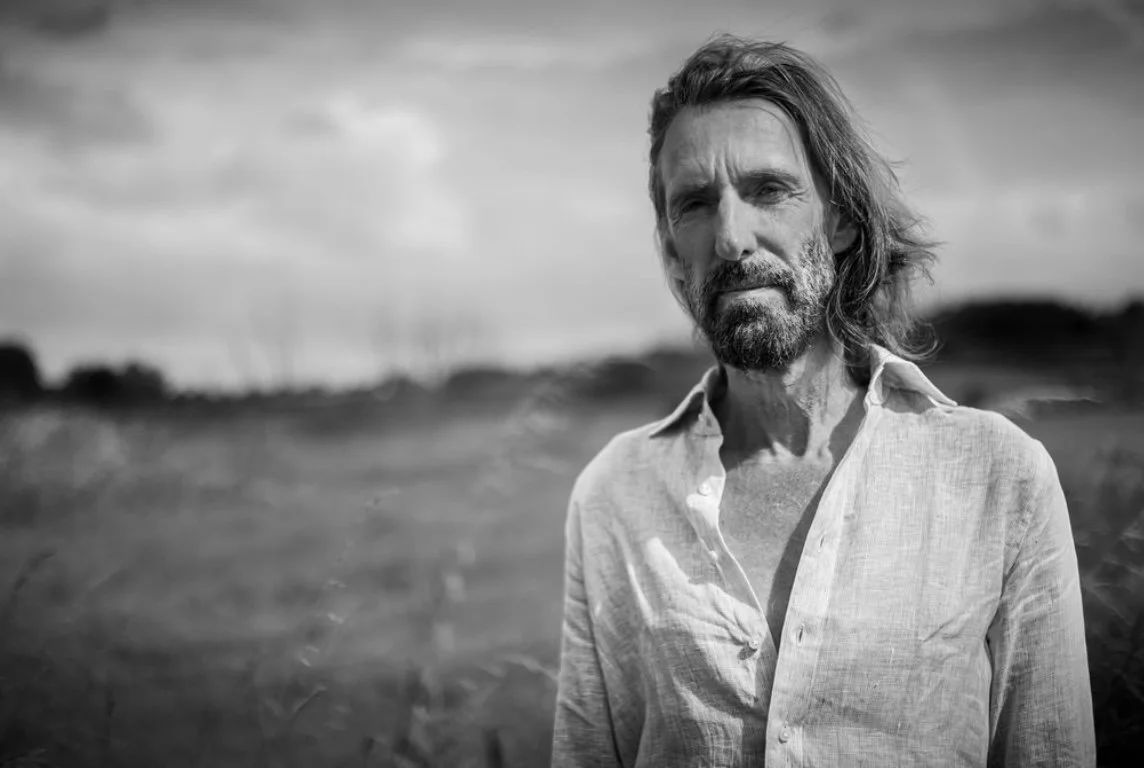
About Mikhael
Mikhael Akasha operates at the intersection of innovation and inner transformation. He is a university lecturer and Innovation Lead at Maastricht University, where he designs and delivers innovation modules within executive and postgraduate education, including MBA programmes ranked among the top three worldwide.
In these programmes, Mikhael works with senior professionals and executives on strategy, future-oriented business models, and systemic innovation in contexts of increasing complexity and uncertainty.
Alongside his university role, Mikhael is the founder of CINMAYA, a platform dedicated to transformation and conscious evolution. In 2025, CINMAYA was recognised by LUXlife as Best Holistic Health & Wellbeing Company.
Across both academic and healing domains, his work is guided by a central premise: that the depth, integrity, and resilience of innovation are inseparable from the developmental capacity of the human beings who conceive and lead it.