Future Proof = Life Proof
A field-guide for leaders who want business models that don’t just close loops, but open futures.
BY MIKHAEL AKASHA

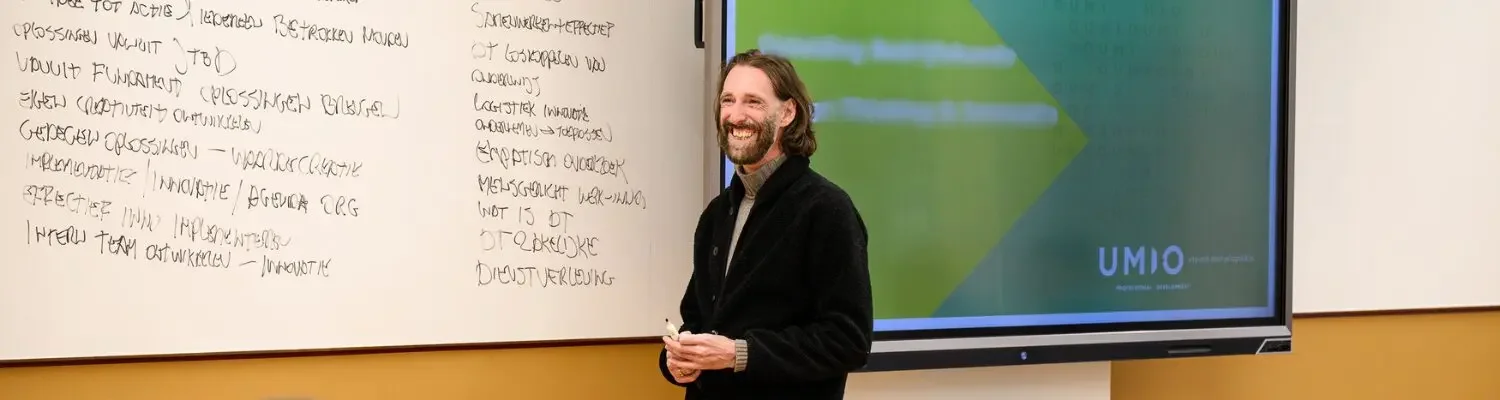
In November 2025 I led an Executive MBA at Maastricht University, we explored Sustainable Future-Proof Business Models: a living weave of strategy, sustainability, and systems thinking. Fairphone brought us a powerful challenge and an even stronger lesson: true impact begins with coherence between words, actions, and values.
Inspiration hunts took us into organisations doing impressive work. And yet, a pattern surfaced: many “sustainable” solutions are engineered around regulations and recycling without asking a deeper question: Does this choice serve life?
Should that be our new baseline: resonance?
Toxic materials numb the field. Resonant materials nourish it
In the scientific language of resonance, everything carries a tone. Nature is resonance. Every living material carries a frequency, a pulse, a perceivable coherence.
Wrap yourself in wool and you feel it. A quiet vitality that supports the nervous system rather than agitating it.
Scientific measures demonstrate that wool vibrates at 5.000 MHz, expressing its living, regenerative quality. Plastic is “zero MHz” carrying no life-force, no breath, no biological intelligence.
Plastic resists every natural cycle.
It is chemically engineered to be inert, rigid and durable. The very qualities that become its curse. So it’s classified as toxic because:
It breaks down into microplastics that accumulate in soil, oceans, drinking water, and even human and animal tissue.
It leaches chemicals; phthalates, BPA, PFAS, flame retardants which can disrupt hormones, immunity, and development.
It suffocates ecosystems by clogging rivers, coastlines, and agricultural soil.
It alters microbial balance in soil, reducing fertility and slowing decomposition cycles.
It accumulates endlessly, overshadowing natural materials instead of nourishing or reintegrating with them.
It traps heat and toxins when burned, releasing harmful compounds into the air.
A moment that shifted the bar
For me this shifted my mindset in class when a student asked a guest presenter about a “sustainable” carpet proposition:
“Why use plastics instead of natural fibres like wool?”
The answer ticked regulatory boxes and circular logic. Still, the question lingered. Circularity matters, but life comes first. Natural fibres and non-toxic materials often align more closely with living systems: breathable, repairable, and, at end of life, able to return to the earth without harm. The point isn’t nostalgia, it’s coherence.
Field notes:
1) Carpeting: loops closed, life ignored?
A manufacturer showcases a fully recyclable carpet with high recycled content. Excellent. Until we ask about off-gassing microfibres, and the air a toddler crawls through.
Life-serving question: synthetics or natural fibre? Which is sustainable, serving the long arc of life?
Design prompt: Would you let your child nap on it, every day?
2) Medical centre: healing begins with materials
We visit one of the largest medical centres in the country who proudly report a circular packaging system for surgical tools: plastics collected and re-issued. From a regulatory perspective, it’s an impressive achievement; less waste, tighter loops, measurable impact.
Life-serving questions:
What alternative materials can be introduced upstream? Can biobased sterile packaging evolve? Can we redesign storage and logistics to reduce dependence on petrochemical polymers altogether?
Circularity closes the loop.
Resonance asks: Should the loop exist in the first place?
3) Clothing shop: the adjective vs. the noun
The day after the course wrapped-up, I walk into a fashion shop and spotted a beautifully designed shirt.
“Highly sustainable brand,” the shop owner said.
“What fabric?” I asked.
“A sustainable artificial weave, it’s a very popular brand.”
“So… plastic?”
“Yes.”
Recycled, certified, circular yet the noun was still plastic. Is it life-serving?
Take Dr. Masaru Emoto’s scientific studies gathering evidence of how the molecular structure of water is transformed when exposed to human words, thoughts, sounds, and intentions.
If water, the element that forms over 70% of our bodies and our planet, can be imprinted by consciousness, then every word we speak, every material we create, every system we design carries that same potential for resonance or dissonance.
This is the deeper invitation behind Lifeproof:
to build not merely sustainable solutions, but systems that remember their belonging to the web of life.
When our innovations, organisations, and materials vibrate in coherence with the living field, they regenerate rather than extract; they heal rather than harm.
Principles: from circular to living
Coherence before compliance
Treat regulation as the floor, not the ceiling. Ask first: What choice enlivens people and places. Now and seven generations ahead?
Material vitality
Prioritise natural, non-toxic, biologically compatible materials. If synthetics are unavoidable, use them minimally, make them separable, and ensure truly safe end-of-life pathways.
Regenerative economics
Design beyond “less harm.” Enable living incomes, local ownership, craft repair, community capability, and bioregional loops.
Nervous-system design
Light, acoustics, textures, and fields should calm and clarify. Environments that restore attention often unlock better outcomes and better work.
Scale what serves
Pilot small, learn fast, then scale the parts that demonstrably improve ecological and human wellbeing.
The Resonance Scorecard
(quick self-scan)
Use this before you label something “sustainable.”
Materials: Are base materials non-toxic, repairable, and able to return safely to earth or cycle indefinitely without harm?
Human experience: Does this calm the nervous system (light, sound, touch, smell)?
Ecosystem effects: Does it protect water, soil, biodiversity? Any microfibre/microplastic risk?
Energy and distance: Are energy inputs clean and proportionate? Can we shorten or localise loops?
Livelihoods: Are workers paid living incomes with dignified conditions?
End-of-life: Is disassembly designed in? Are local pathways ready (repair, refill, compost, remanufacture)?
Honesty: If marketing adjectives were stripped away, would the noun still make sense?
Score each 0–2 (No / Partly / Yes).
12–14: Strong resonance. 8–11: Improve before scaling. 10->: Rethink the core.
What this means for strategy
Future-proofing isn’t a compliance exercise. It’s an act of alignment: product, place, people, and planet moving in tune. Circularity could be a good approach; resonance makes it meaningful.
Fairphone: coherence in practice
Our MBA challenge partner, Fairphone, reminds us that supply chains are human chains. Traceability, repairability, living wages and modular design point in the right direction—as well as transparency about the journey. That’s the spirit we need across sectors. Yet one frontier remains under-spoken across the entire mobile industry: the energetic impact of mobile radiation on the human ‘living’ field.
Every phone, no matter how fair, emits electromagnetic signals. These signals are part of our modern environment, and most mitigation today is framed through regulatory thresholds rather than well-being.
Design prompt that shifts the question for Fairphone:
How might a device minimise exposure to negative radiation without compromising connectivity?
This is a challenge worthy of Fairphone’s spirit.
A chance to move from “fair” to whole, from responsible manufacturing to truly life-aligned technology.
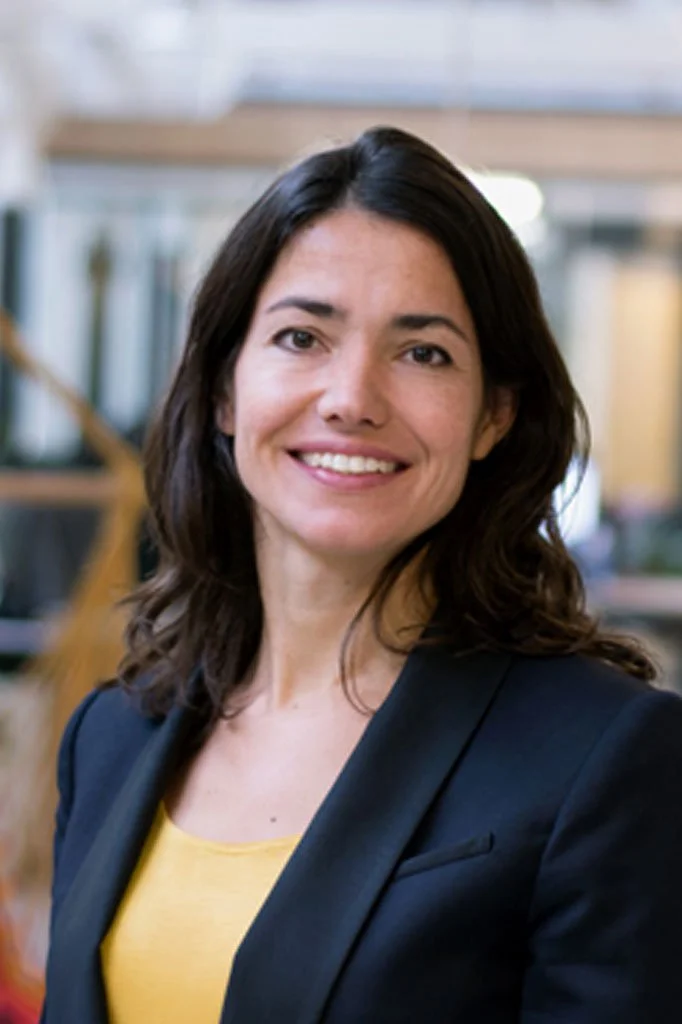
Monique Lempers, Chief Impact Officer at Fairphone
“Working with MIKHAEL AND the MaastrichtMBA cohort on the Future-Proof Business Models elective provided Fairphone with practical input and diverse perspectives, alongside new business model prototypes. The collaboration offered fresh ideas on international expansion and regenerative pathways, supporting our mission to lead human-centred change in the electronics industry.”
I’m deeply grateful for all the wonderful participants and the generous contributors who shaped this Executive MBA program. Your curiosity, your questions, and your lived experience ignited inspiration, sparked fierce and beautiful discussions, and opened reflections that will echo far beyond the classroom.
Together, we didn’t just explore models, we expanded what is possible.
An Invitation to Continue the Conversation
If this lens of resonance speaks to you, whether as a leader, designer, strategist, or creator. Let’s continue the dialogue.
You’re welcome to book an introductory meeting through Maastricht University UMIO, where we explore organisational challenges, business model innovation, and future-proof strategy.
Or, if you prefer a slower rhythm, join me for a walk in nature. These walks offer space to breathe, reflect, reorganise, and reconnect with the intelligence that lives beneath every decision:
👉 mikhael@cinmaya.com